Four ideas for one rear wing.
In 2026, active aero replaces DRS: the rear wing changes shape on track to switch between downforce and low drag. Each team chose its own way. I compared their ideas in 2D CFD.
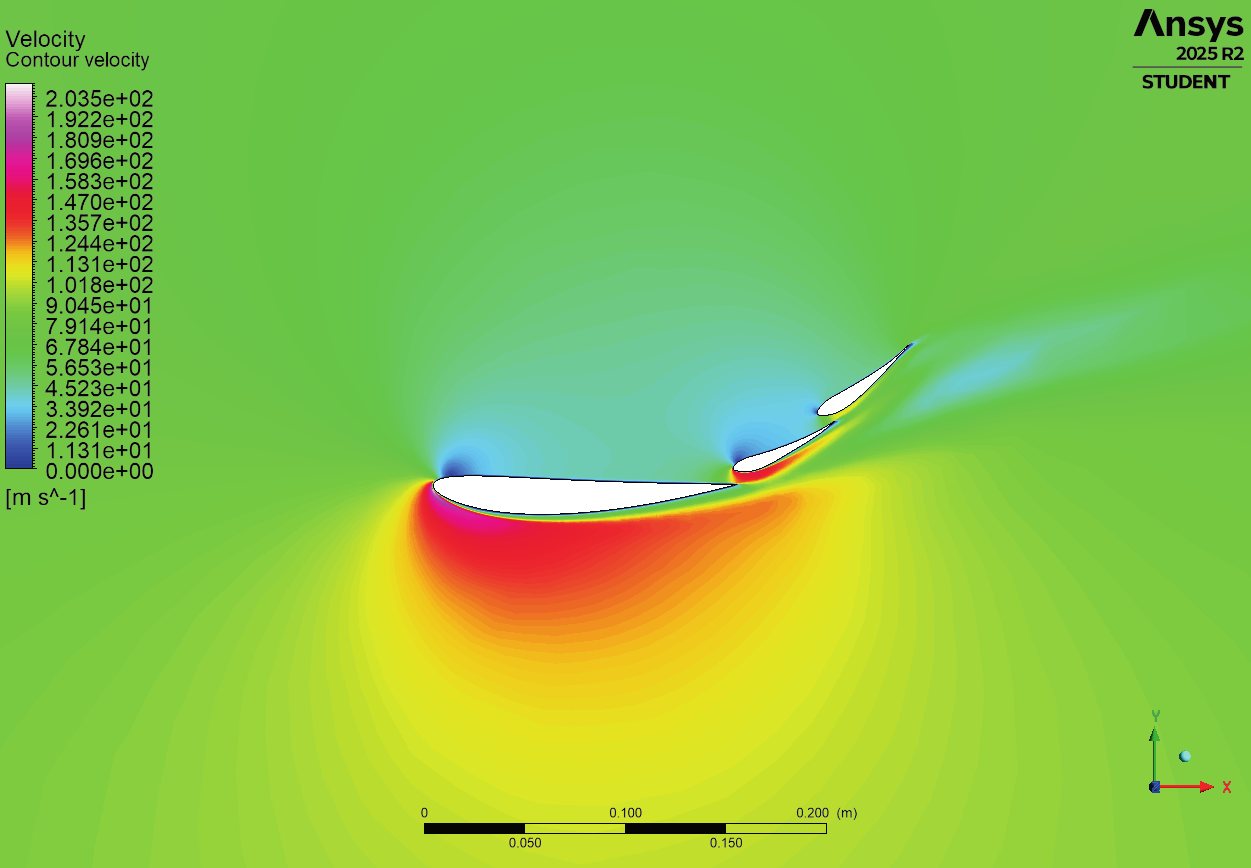
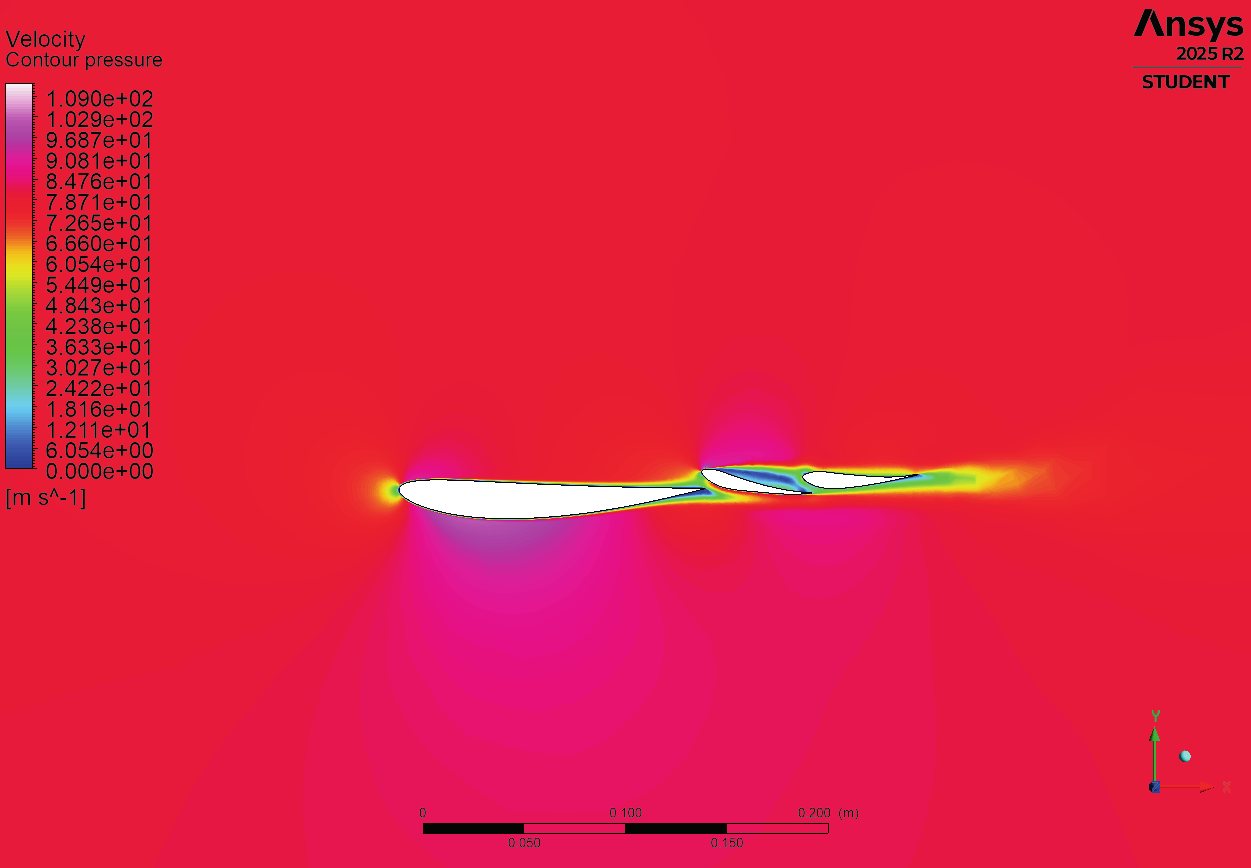
Velocity field around the closed profile, at 288 km/h.
- Simulated speed
- 288 km/h
- Concepts compared
- 4
- Simulations
- 7
- Software
- Ansys Fluent
Closed vs open
The closed profile creates a fast flow under the wing, so low pressure and lots of downforce: great in corners, bad on straights. The flap that opens upwards, used by most teams including Mercedes, is the reference.
- Closed: Cd 0.17 and Cl −4.42, glued to the track.
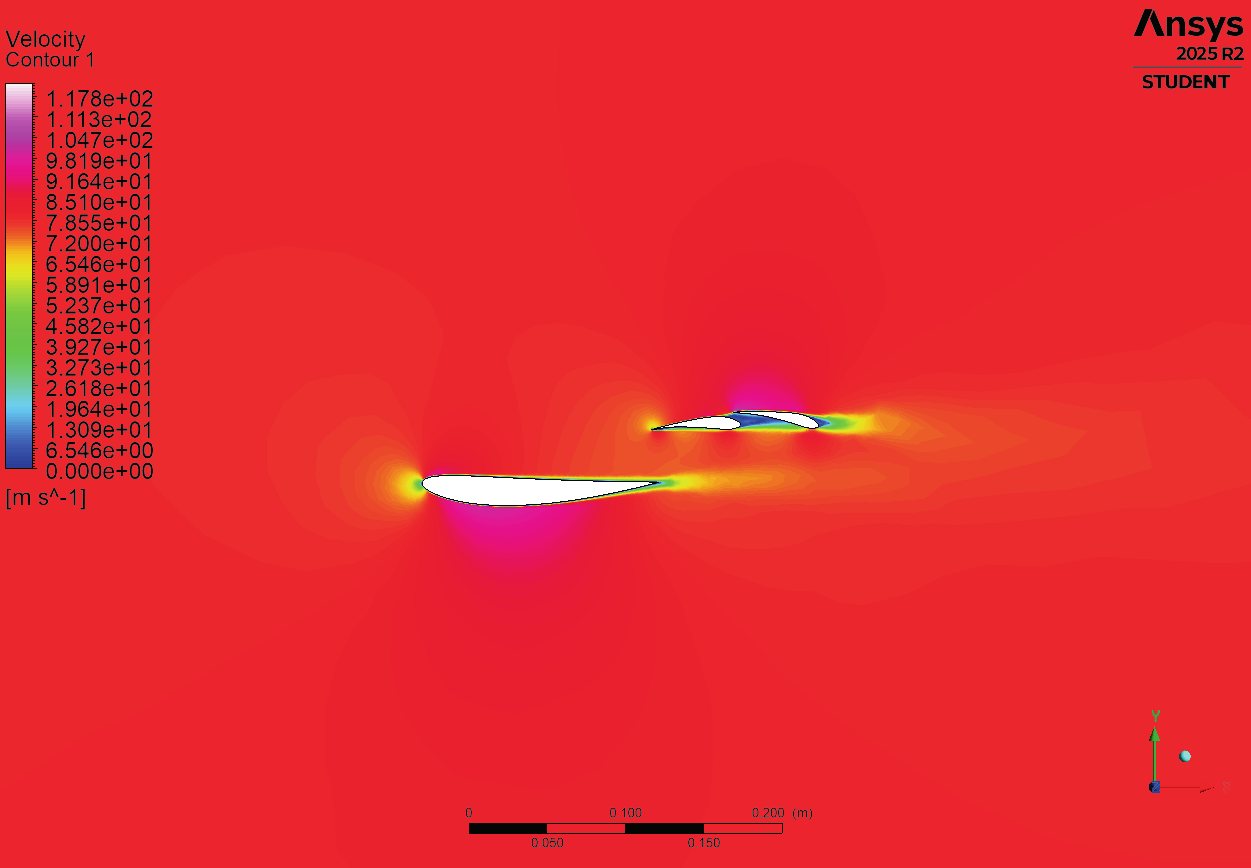
- Classic open: Cd 0.04 and Cl −0.79.
- Drag cut by four, but almost all downforce is lost.
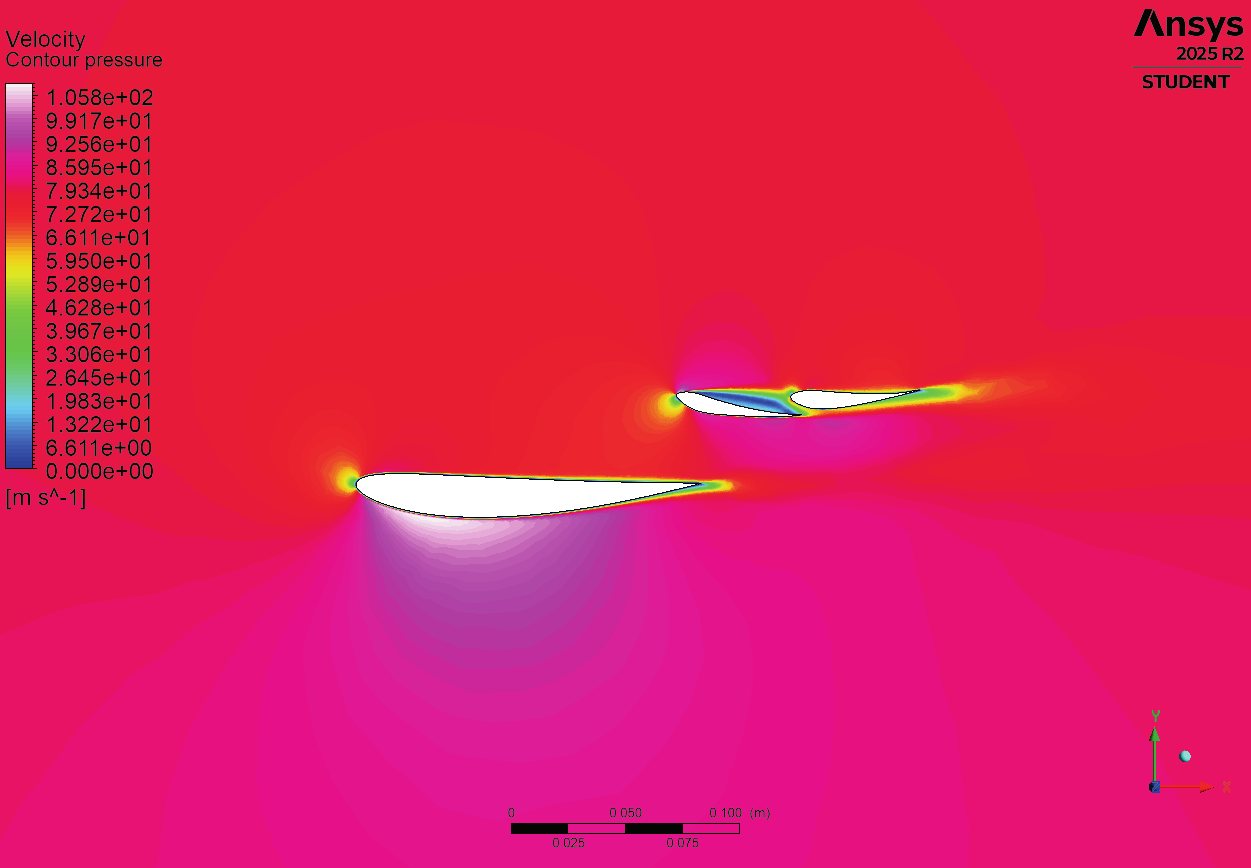
Red Bull and Ferrari: open downwards
Two teams open the flap downwards to create lift at the rear in Straight Mode. This takes load off the rear tyres and raises top speed.
- Open: Cd 0.04, Cl −0.11 (Red Bull) and −0.10 (Ferrari).
- Half open: drag peak, Cd 1.08 (Red Bull) vs 0.94 (Ferrari).
- Ferrari has the better Cd in transition, Red Bull switches faster so drivers can brake later.
Alpine: a controlled transition
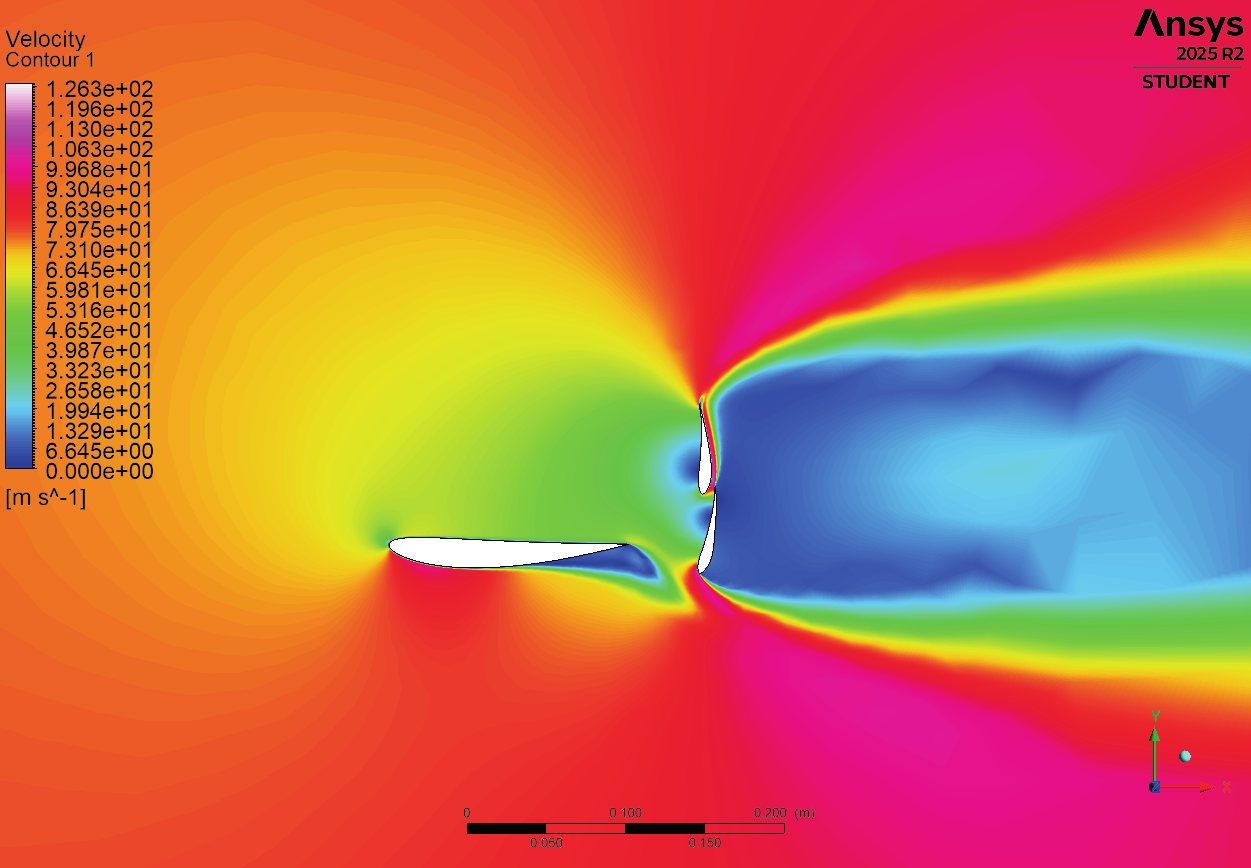
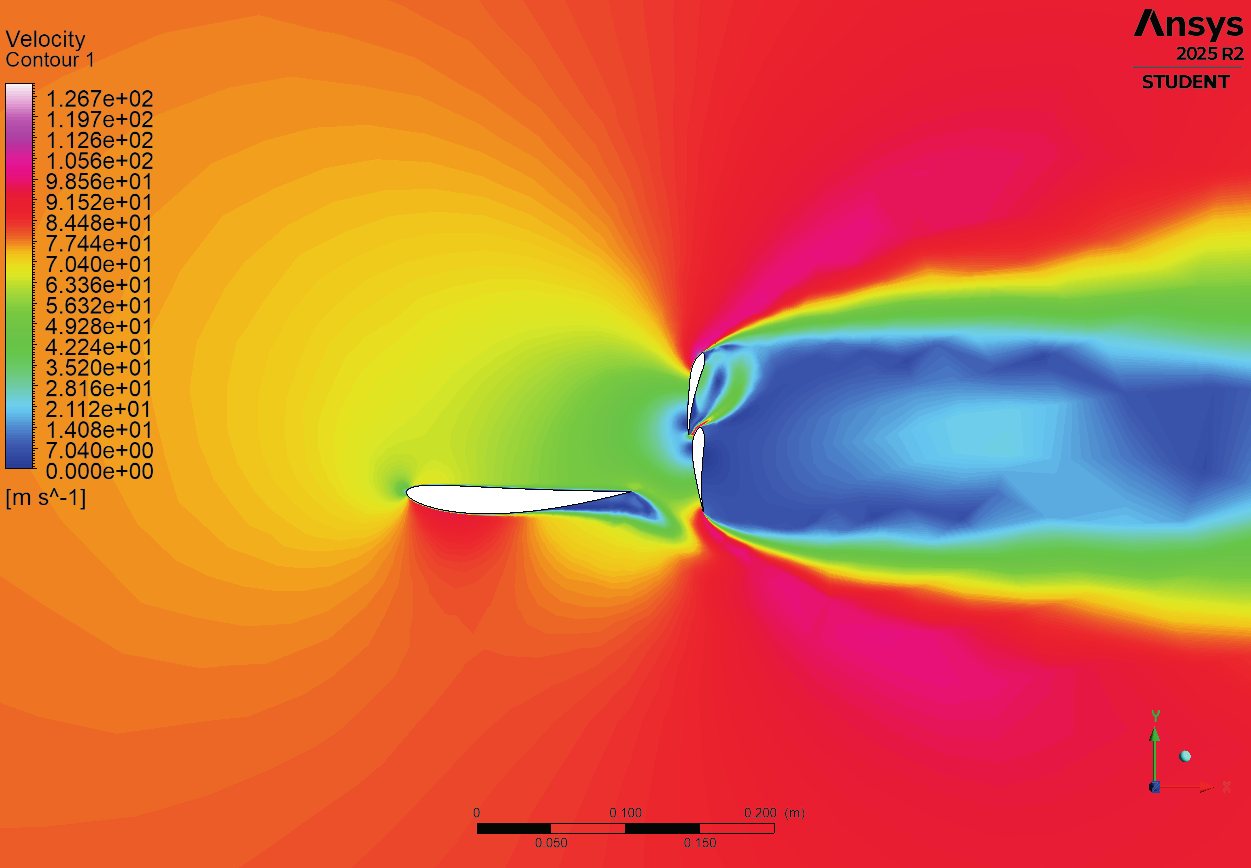
Alpine plays it safer: same minimum drag, but a more careful open shape that keeps some downforce.
- Open: Cd 0.04 and Cl −0.37.
- More stable transition when the wing opens.
- Avoids the sudden loss of rear grip that Ferrari and Red Bull drivers must manage.
Seven runs, one straight line.
| Profile | Cd | Cl | Drag vs closed |
|---|---|---|---|
| Closed | 0.17 | −4.42 | — |
| Classic open | 0.04 | −0.79 | −76% |
| Red Bull, half open | 1.08 | −0.67 | +535% |
| Red Bull, open | 0.04 | −0.11 | −76% |
| Ferrari, half open | 0.94 | −0.42 | +453% |
| Ferrari, open | 0.04 | −0.10 | −76% |
| Alpine, open | 0.04 | −0.37 | −76% |
All four concepts reach the same drag floor when fully open. The real battle is the transition: how fast you get there and how much rear stability you give up. No wrong answer, just different levels of risk.